Mola Clans, Meaning & History

Origin and Distribution: The surname Mola has multiple origins. In Italian, it is derived from the word “mola,” meaning “millstone,” and may have been an occupational surname for someone who worked as a miller or in a mill. It is relatively common in Italy, particularly in the southern regions such as Sicily and Calabria, and is also found in countries with Italian immigrant populations, such as the United States and Argentina. ((https://www.findlastnames.com/l/31978/mola?utm_source=openai))

In Ethiopia, “Mola” is a variant of the surname “Molla,” which is common among Ethiopian Jews. ((https://forebears.io/surnames/mola?utm_source=openai))

Meaning: In Italian, “mola” means “millstone,” indicating an association with milling or grinding. In Ethiopia, “Mola” is a variant of “Molla,” a common surname among Ethiopian Jews. ((https://forebears.io/surnames/mola?utm_source=openai))

Famous People: Specific information regarding notable individuals bearing the surname Mola is not readily available in the provided sources. Further research into regional records and historical documents may provide more insights into prominent figures associated with this surname.

Ndou Clan

History: The surname Ndou is common among the Venda-speaking peoples of Southern Africa. It signifies a connection to leadership and nobility within these cultures. Notable individuals with this surname include:

  • Thulani Ndou: A South African boxer born in 1978, known for his skills in the ring.

Mbuyisa Makhubu

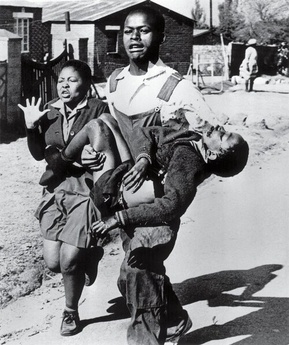
Mbuyisa Makhubu (born 1957 or 1958) is a South African anti-Apartheid activist who disappeared in 1979. He was seen carrying Hector Pieterson in a photograph taken by Sam Nzima after Pieterson was shot during the Soweto Uprising in 1976.Despite the photograph’s endurance, little is known about Makhubu.

June 1976 Hector Petersen. Photograph by Sam Nzima/South Photographs.

After the photograph was released, Makhubu was harassed by the security services, and was forced to flee South Africa. His mother, Nombulelo Makhubu, told the Truth and Reconciliation Commission that she received a letter from him from Nigeria in 1978, but that she had not heard from him since. She died in 2004, seemingly without knowledge of what had happened to her son. Mbuyisa was one of a number of South African activists given refuge in Nigeria immediately following the Soweto incident. He was one of three who were settled in a boarding high school in South-Western Nigeria – Federal Government College, during the 1976-1977 academic year. But all failed to settle, and had moved on within the year.

In 2013, claims emerged that a man, Victor Vinnetou, imprisoned in Canada for the previous eight years on immigration charges was Makhubu. Genetic tests were conducted to determine whether he was indeed Mbuyisa Makhubo. It was later reported that the DNA tests did not substantiate the man’s claim to be Makhubu, to the disappointment of Makhubu’s family,though the DNA test was reported to have been done on a family member without blood relations to both parents.

As of 2020, his whereabouts still remain unknown. The same year, a four-episode documentary titled Through The Cracks, which was released on 44th anniversary of the uprising on June 16, 2020, provided some previously untold details about Makhubu’s life. It was also reported that a heritage plaque commemorating Makhubu would be installed on June 16, 2020 as well.