If you know more about Bhaca Clan Praises , please add them here: https://izithakazelo.blog/add-your-surname-info/
Tag: cebisa
Umlando wamaBhaca

“Historically, around 1720’s, we the Bhacas lived in the Northern part of the Pongola River near the Lebombo Hills, in a place that is today the boundary between Mpumalanga and Swaziland. As it is often stated that at about this period, the KwaZulu Natal was occupied by different tribes such as abaMbo and the aMalala, it is suspected that the amaBhaca came from one of these tribes. During this period amaBhaca were Zelemus.
The movement of the Bhacas is estimated to have been visible between 1734 and 1820’s.
Between 1734 and 1800’s the amaZelemu left the land below the Drakensberg Mountains towards the east at times would hide in the forests like Nkandla forest so that they would not be seen. It is suspected that when the amaZelemu fled, they were accompanied by the amaWushe. Some chief that lived along amaBhaca include Chief Nondzaba, Dlepu, Mnginambi and Macingwane.
These tribes lived together without clash amongst each other. The clash started (BIG-Clash) with the then Zulu King Shaka during the Mfecane wars. It was the day King Tshaka sent his troops to attack the amaZelemu tribe. It is believed that in 1820 Madzikane had an argument with Tshaka because the amaZelemu tribe was unified, strong and frightening and that Tshaka did not like this. He thought that this tribe was trying to imitate him. Tshaka, his councillors and his traditional healers therefore plotted to kill Madzikane.
When the battle broke out, tribes spread out and lost some of their members. Some members of amaWushe collected some of their members, however others joined under Madzikane, son of inkosi uKhalimeshe. Madzikane fled in an eastern direction, following the exact same route as the Amachunu tribe that had also moved because of this unrest. He crossed the UMkhomazi River. Other tribes, aMacingwane under chief Cekwane, amaVundla, amaNtunzela and amaWushe Nondzaba in 1821. It is believed that amaVundla and amaNtunzela tribes were attacked and forcefully removed and their livestock taken by amaWushe under inkosi Nondzaba.
AMakhosi, Madzikane and Nondzaba worked together. Nondzaba met with Madzikane and together they went to the land of amaMpondomise. At that time the amaMpondomise lived in the area of Rhode in Mount Ayliff. On their arrival they attacked the amaMpondomise and took their live stock. Nondzaba continued towards Tsolo and this is where he was killed.
Inkosi uMadzikane had decided to stay between Rhode and the uMganu mountains in the Mount Free district. It is here where he built his great place. In August 1830 Tshaka again attempted to attack Madzikane. Inkosi Madzikane, was warned that Tshaka was planning to attack. In preparation for another battle, the children and the live stock were taken into hiding at Umganu and Luyengweni, while the amaBhaca troops were training, waiting to fight when attacked. When the Zulu troops arrived, mighty of inkosi Madzikane defeated them. They were overcome by the cold and many of them were frozen. The Madzikane troops attacked the Zulu troops and the Zulu troops retreated back home. Since that day, the now called Ntsizwa Mountains were named after the death and the killing of the iintsizwa zikaTshaka. The death of the Zulu troops was seen as Madzikane’s magic. It is believed that as he was strong on muthi, and also a traditional healer, Madzikane used his muthi. This also follows his statement as often quoted after he had received the rumours that he was going to be attacked by the Zulu troops, “Umkhosi wakaZulu mina ngowushaya ngesandla esisodwa” (meaning, “I will beat the Zulu army single handedly”). Although there are different stories on the actual performance of Madzikane’s muthis, there is a story that says Madzikane made a big fire and the smoke that came from that fire turned into clouds that produced frost.
Madzikane proceeded with his mission to expand the Bhaca Nation. However, four years later he died. It is suspected that he was killed by the Thembu army at the forest of Gqutyini as he had attacked and attempted to take the cattle of abaThembu.
Madzikane’s son from his first wife, Mdutyane, was still young. INkosi Ncapayi from the right hand house had to rule. The Bhaca nation became strong under the rule of Ncaphayi. In 1835 the amaBhaca built a strong relationship with Inkosi Faku of the Pondoland. AmaBhaca temporarily migrated to Pondoland under the arrangement with iNkosi uFaku. However this relationship did not last long. AmaMpondo quarrelled with amaBhaca. It is suspected that the quarrel had something to do with the number of cows for lobola payment. The story goes on to say that a Bhaca young man was killed when he went to fetch his cattle that he was paid for lobola. On the other hand, it is said that Ncaphayi did not want to combine his army with that of amaMpondo. These troops met at a battle in the land of Lusikisiki. Other Bhacas under Mdutyane fled to Mzimkhulu. It is believed that Ncaphayi tried to attack Faku in 1844. Unfortunately Ncaphayi was killed at an area called Nowalala in Pondoland.
As Mdutyana followers stayed at Mzimkhulu, Ncaphayi’s first son Diko had to take over and rule. Later on the son from the second wife and the younger brother, Makaula took over and ruled. Diko is the Chief of ELundzini Royal Kraal at Lubhacweni in Mount Frere. The district of Mount Frere is built on the land under iNkosi Diko. Makaula is also one of the Chiefs at Elugangeni area under Mount Frere District as well. ”
source: kwabhacakingdom.co.za
User 1
Mina ngithanda ukwazi ngabakwaNdongeni ngoba ezithakazelweni kukhona uQubulashe okuyesinye sezithakazelo zamaWushe. Kanti futhi kukhona emndenini abashade kwaMjoli. EGugulethu lapho ngikhulelel khona ubuye uthi mawuthi unguNdongeni angaziwa loNdongeni ngamaXhosa. Bekuze kubengcono mawuthi uliWushe. Noma bekhona oNdongeni kwaXhosa abahlangene noNdongeni bakwaBhaca EMt. Frere. Kwenzekani kuNdongeni awayephelezela U Dick King. Ngokomlando esawufunda kuthiwa wanxepehzelwa ngamaNgisi ngomhlaba north of Umzimkhulu which is under claimand handled by KZN Land Claims Commission.
Bhaca traditional attire

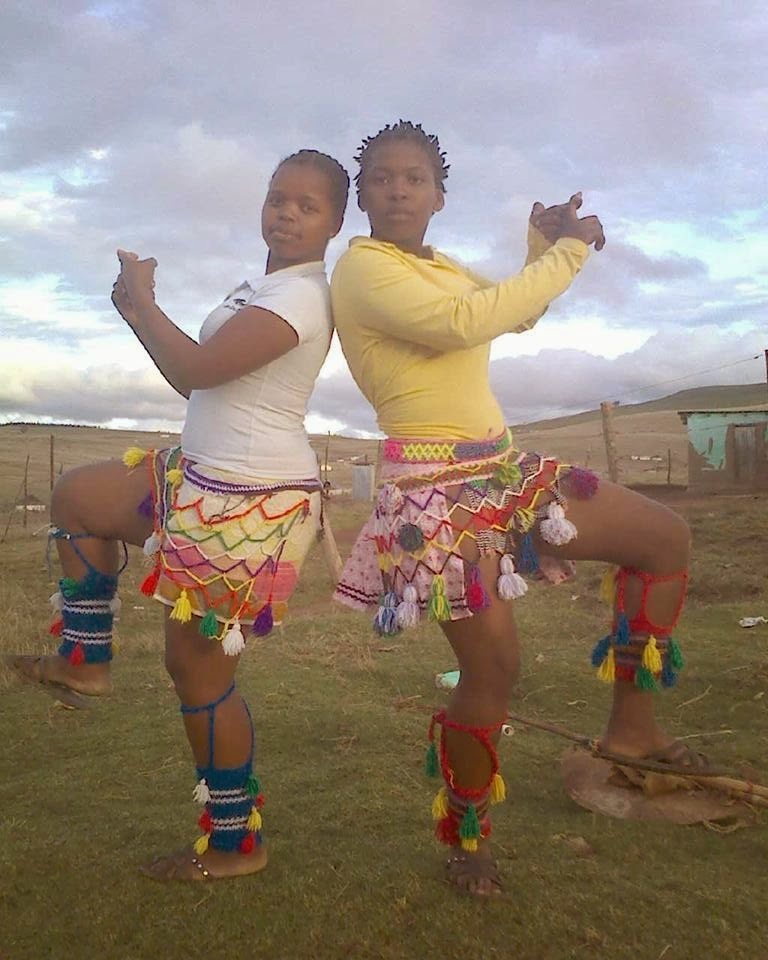
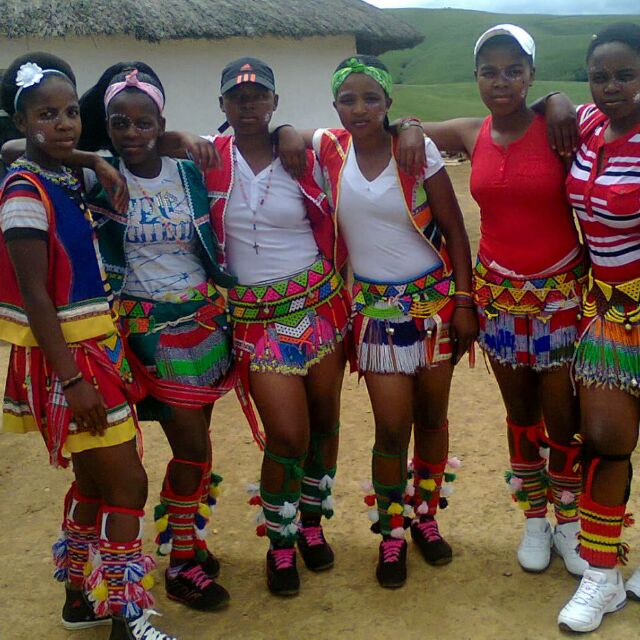


The Bhaca people or amaBhaca are an ethnic group in South Africa, mainly found in the small towns of the former Transkei homeland, Mount Frere and Umzimkhulu, and surrounding areas (a region that the Bhaca people call kwaBhaca, or “place of the Bhaca”). Their language, isiBhaca, is Xhosa with strong Zulu and some Swati influences. The origin of their name is unclear.
The word ukubhaca in Nguni languages means to flee, and it is argued that their names stems from their flight during the Mfecane to present day KwaZulu-Natal. However, the word ukubhaca among the Bhaca people also refers to the ritual scarring of the face known as ukuchaza, a complex rite that is sometimes done for healing. Thus the Bhaca people could possibly have been named after this practice.
The Bhaca were led by king Madzikane into what is now Eastern Cape. Currently the Bhaca are mistakenly considered to be part of the Xhosa people who dominate the province, but their culture is still very distinct and their kingdom is independent. Madzikane was the founder and a King of the Bhaca people. His successor as king was Ncapayi.
The Kingdom of Bhacas is currently being revived by the great house of King Ncapayi, Inkosi Madzikane II Thandisizwe Diko.
The Reign of King Ncapayi
King Ncapayi had many wives. The great and senior house gave birth to Diko and Sogoni, from the second wife (Indlu yekunene) was Makaula, the third wife (Iqadi lendlu enkulu) was Dabula and Mphongoma.
Ncapayi is said to have been a fearless freebooter, a diplomat of note who showed even more intelligence than his father.

According to Rev. Soga, during the same year in which Ncapayi’s father –Madzikane – was killed, Ncaphayi entered Tembuland to avenge his father’s death. The Thembus under King Ngubengcuka made an ineffectual stand and the Bhacas swept away a large number of cattle (Soga, p. 443)
Before King Madzikane died and because of the relationship he had with King Faku, he advised his son to temporarily be a tributary King in Pondoland. He indeed did that and Faku at this time welcomed the Bhacas as this also coincided with the arrival of Nqetho, a Chief of the Qwabes who had moved from Natal running away from King Tshaka’s army because he could not serve under King Dingane. When he entered Pondoland and tried to secure land by violence, Faku was anxious to rid him out and therefore secure assistance from Ncaphayi to eject Nqetho. AmaBhaca drove them away back into Natal and Dingane issued an instruction to kill Nqetho
The Thembus defeat by the Bhacas discussed above, also led to Faku making an arrangement with Ncapayi when Pondos wanted to attack the Thembus. They entered Thembuland on three successive occasions and each time their raid was a success. Ncapayi is said to have been a fearless freebooter that was respected by many nations
Soga asserts that cupidity is said to have been the force that brought Faku and Ncapayi to work together. It is also cupidity that is said to have destroyed their good working relationship. Because they were both strong, it became difficult to know which one more powerful that the other. The freebooter attacked Nyanda, the Right Hand section of the Phondos under Ndamase, the son of Faku. He raided Nyanda successfully. Meanwhile the alarm had been raised with Faku and therefore Faku assembled a powerful army and this came up with the Bhacas and attacked them on all sides.
Faku drove the Bhacas before him on the ridge kuNowalala. Ncaphayi was wounded and forced over the rock, falling on to a ledge some distance from the Bottom. He was in helpless condition with both arms broken, besides a severe assegai wound. He laid there for days, persuading those who came to look at him to put an end to his misery and kill him. No one could do this until Faku gave orders that he must be killed. Thus the death of Madzikane’s son, king Ncapayi in 1845.
Conflict with the Afrikaners and the British
In about 1837 Boers arrived in Natal with herds of cattle and the Bhacas saw an opportunity to attack and raid. Between 1837/39/40, the Boers are said to have been fighting in Natal when the Bhacas teamed up with the Bushmen and raided.
In about February 1838 the Boers settled in the upland of Natal and had successfully set the foundation upon which they could erect the Republic of Natalia, which after their victories over Dingane, they extended northward to uMfolozi and St. Lucia Bay (Blue Book on Native Affairs, 1885). The Boers had managed to get into arrangements with other kings and therefore did not consider them as potential enemies anymore. For an example they considered King Faku to be a friendly king and rated Ncapayi as having a powerful military and as being a threat.
When the Boers came back, they decided to attack the Bhacas (Bryant, p. 400) and raided 700 and 50 horses (Nchanga, 119). This is said to have provided the spark for the British intervention in the Bhaca land (At this time this land had become part of Natal). There is still an area near the town of Maclear which is still called Ncapayi land (Kapayi land – because they could not pronounce “Nca”).
The Reigns of Diko and Makaula
By 1845 the Bhacas had already been stripped of their Kingdom through Maitland Treaty. Ncapayi, the First Enemy in the Maitland Treaty died and was survived by his first son, Diko.
Inkosi Diko was considered a hero, a stubborn and a fearless leader of courage. He led the amaBhaca nation for 35 years from 1845 to 1880 after the death of his father iKumkani Ncapayi ka Madzikane. Inkosi Diko was the grand-son of King Madzikane ka Zulu.
iNkosi Diko was a fierce leader who fought against the annexation of the land by the British Colonial Government and he even resisted handing over amaBhaca nation to become British subjects. As a result of his resistance to the oppressive rule of the colonisers he never became the favourite of colonial government of his time. That government could not stand him and they decided to overthrow in 1880. The oppression of Diko’s house has been felt by all eight (8) generations, for a period of 130 years.
IYELENQE (A CONSPIRACY) THAT CAUSED DIKO (THE GREAT SON OF NCAPHAYI) TO LOOSE
According to the writings of Anderson Mhlawuli Makaula (1988), by virtue of birth and according to tradition, Diko was the heir to iKumkani Ncaphayi, but, because of some councillors of amaBhaca who liked Mamjucu, the mother of Makaula, she was fraudulently made a great wife, hence her son attained chieftainship. Makhohlisa (the mother of Diko and Sogoni) who was Ncaphayi’s wife of the great house (uNdlunkulu), was not loved by these councillors, hence they plotted against her.
It happened that Ncaphayi had killed a man in one of the Mfecane battles and according to amaBhaca tradition, iNkosi was not supposed to have any contact with his wives until he had undergone some medical treatment. A separate accommodation was to be provided for him. Ncaphayi was then placed in isolation for a stipulated period. It was further conspired by the councillors under Qulu Siwela that the wife who goes to cook for iNkosi Ncaphayi in isolation and conceives during that period would be the one who would give birth to the chief that would succeed Ncaphayi after his death.
The councillors first went to uNdlunkulu Makhohlisa, (Diko and Sogoni’s mother) and deceived her that she must not dare put her foot in the isolation place where Ncaphayi was sleeping, because this would weaken her sons and thus cause death by assegai among her children. This sounded reasonable to Makhohlisa. Thereafter the same councillors went to advised Mamjucu, (the second wife) to go and cook for iNkosi Ncaphayi in the isolation place. She acted as instructed and her son, Makaula was then made iNkosi of amaBhaca.
Ever-since then, because of this conspiracy, this trick and treachery, the Great House of Ncaphayi has suffered a great deal of disrespect, degradation and injustice throughout generations that followed.
After iNkosi Ncaphayi’s death Diko (his first and eldest son) led amaBhaca from 1845. iNkosi Diko was always in conflict with the British Government and he blatantly refused the annexation of the land of amaBhaca nation. When the British supremacy pervaded the Transkei territory during the 1860s, the government pioneered the annexation of the Transkeian territories. Amakhosi were to give up their power and paramouncy and become subjects of the British Colonial government. Magistrates were to take over the power from amaKhosi, especially those who refused submitting their nations to be under the British rule. iNkosi Diko was one of those traditional leaders who resisted and he was then overthrown as iNkosi, deposed and made headman by the colonial government in 1880.
Battles were fought throughout this period, for an example, a friend to iNkosi Diko was iNkosi Mhlontlo of amaMpondomise who is said to have killed a magistrate at Qumbu in resistance against such annexation. Other amaKhosi who accepted annexation were rewarded for their loyalty to the oppressive colonial government and eventually they were looked after and treated well by the colonial government.
The plan to destroy any trace of iNkosi Diko and his descendants has prevailed over generations after this great hero had died. Even today, Diko’s files, from iNkosi Diko himself, Qoza ka-Diko, Mthakathi ka-Qoza, Mabhijela ka-Mthakathi, Dingumhlaba ka-Mabhijela and Mzawugugi ka-Dingumhlaba (all the descendants of Diko) have been removed from the archives in Mthatha. The big question is: What happened to these files and where are they?
It is a known fact that iNkosi Diko’s Great Place of amaBhaca was forcibly removed by the oppressive government of that time. The town Mount Frere is built on the land that was once iKomkhulu (the Great Place) of iNkosi Diko (it was called eMbondzeni). The land claims process and the documents in possession of the Land Claims Commission confirm this. Even the grave of iNkosi Diko is said to have been in this area, some say it is where the current Standard Bank is and others say it is where Malinge Wholesalers is. What this means is that the descendants of iNkosi Ncaphayi’s Great House never had access to iNkosi Diko’s grave and his remains. Who was responsible for this? Will this chapter ever be closed? Was it because he refused giving the land to the oppressive government of that time?
INKOSI UMADZIKANE WESIBINI (ll) THANDISIZWE DIKO (Bayede Tholelengwe)
AmaBhaca are mainly found in the small towns such as Mount Frere, uMzimkhulu, Xopo and some surrounding areas. The isiBhaca language is a mixture of isiXhosa, isiZulu and isiSwati. The language of isiSwati was influenced by the fact that King Madzikane’s mother was from one of the Royal Houses of the Swatis of aMalambo. He grew up within the Swatis from his mother’s side and therefore spoke the language. Although he accepts that he is not an authority on this, Jordan, A.C. (1953) argues also assets that in the traditional history of the Bhacas, “uDlamini and kwaDlamini” figure a great deal (P.5). He further states that the Bhaca language was stifled to death chiefly by isiXhasa through, amongst others, schools and churches and that a large number of enlightened Bhacas were taught to look down upon their mother tongue.
Madzikane is still a much respected King in Mount Frere and anywhere else among the Bhaca people.
Diko is the first son of Ncapayi, (Makhohlisa a daughter of Dzanibe clan was the first wife of Ncapayi) with his younger brother Sogoni from the first wife of Ncaphayi. The younger brother from the second wife was Inkosi Makaula followed by Inkosi Dabula and others from other younger wives. Inkosi Madzikane ll Diko is the Crown Prince of iNkosi Dilizintaba, ka Dingumhlaba, ka Mabhijela i, ka kaMthakathi, kaQoza ka Diko ka Ncaphayi, ka Madzikane, ka Khalimeshe, ka Vebi, ka Wabane, ka Didi, ka Zulu, ka Ntombela, ka Malandela, ka Dlungwana, ka Ndaba.
INkosi Madzikane II Thandisizwe Diko is currently the Head of the kwaBhaca/LuBhacweni Traditional Council at ELundzini Royal Kraal, Ncunteni Great Place, LuBhacweni A/A in Mount Frere, KwaBhaca.
AmaBhaca were therefore stripped off their dignity and their Kingdomship by the Colonial Powers, the Boers, the Griquas and later on, the apartheid systems did not make it any better. The home of the Bhacas is in Mount Frere, while other Bhacas who went back to KwaZulu are in Mzimkhulu and Ixopo under the Zulu Kingdom.
User 2
so as ibhaca too I would like to know o nxanda klaus xesibe:mnune doyi bhathane matshaya ngenqawe’nde abanye betshaya ngezimfutshane mbimbi bhelesi umantsaka nondzaba yondzaba kanjani lendzaba ungayati baka tshomela ka matsho. were part of this journey of bhaca people we in maclear and surrounding areas and Suthi singamabhaca are we right xa sisitsho