
πŸ’›

izithakazelo

Tag: ndungunye Page 12 of 24

IZITHAKAZELO ZAKWA DLAMINI

DLAMINI, ZIZI, JAMA KASJADU, FAKADE !

His descendants would go on to establish royal houses across Southern Africa, including the reigning monarchy of Eswatini.

His reign saw significant challenges as much Swazi land was lost to Boer concessionaires. He was given the title Dlamini IV upon ascending the throne, chosen by Sisile Khumalo, the late king’s mother, to take the kingship.

They conquered and incorporated many earlier inhabitants, eventually ruling over all of present-day Eswatini. The House of Dlamini continues to serve as Eswatini’s reigning royal family to this day.

1950-2021)
King of the Nhlangwini people who sought recognition as an independent kingdom within KwaZulu-Natal. Despite his claims being rejected by the Nhlapo Commission in 2009, he maintained his status as king until his death. His son Nqalabutho kaMelizwe Dlamini succeeded him and continues his father’s legacy, receiving a certificate of recognition from the Congress of Traditional Leaders of South Africa in 2024.

He continues to seek full constitutional recognition of his kingdom, maintaining that the Nhlangwini have never bowed to the Zulu king and have no historical relationship with the Zulu monarchy. His cause represents one of several KZN tribes seeking recognition as independent kingdoms.
Dlamini Clan Praises Xhosa | Iziduko

Dlamini JAMA ka sjadu Zizi elimnyana ne Nkomozayo qhubungulashe mtatiele fakade !

His descendants would go on to establish royal houses across Southern Africa, including the reigning monarchy of Eswatini.

His reign saw significant challenges as much Swazi land was lost to Boer concessionaires. He was given the title Dlamini IV upon ascending the throne, chosen by Sisile Khumalo, the late king’s mother, to take the kingship.

They conquered and incorporated many earlier inhabitants, eventually ruling over all of present-day Eswatini. The House of Dlamini continues to serve as Eswatini’s reigning royal family to this day.

1950-2021)
King of the Nhlangwini people who sought recognition as an independent kingdom within KwaZulu-Natal. Despite his claims being rejected by the Nhlapo Commission in 2009, he maintained his status as king until his death. His son Nqalabutho kaMelizwe Dlamini succeeded him and continues his father’s legacy, receiving a certificate of recognition from the Congress of Traditional Leaders of South Africa in 2024.

He continues to seek full constitutional recognition of his kingdom, maintaining that the Nhlangwini have never bowed to the Zulu king and have no historical relationship with the Zulu monarchy. His cause represents one of several KZN tribes seeking recognition as independent kingdoms.

Mabi Clan Names | Mabi Surname

Mabi, Nguta, Mwelase, Mphakula, Ngelengele, Mbanjwa, Dlamini, sitsha esingadleli, sidlelwa zinkonjane zona ezibaba phezulu, wena uwela ufala ucwele, Zizi, Hlubi elihle

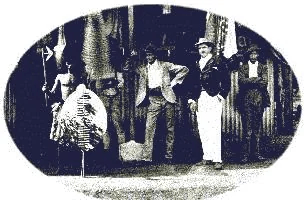
Chief Bokweni Mamba, 1920s

Born in 1876 and dies in 1940, Chief Bokweni Mamba was the son of Matja I and chief of the Mamba clan who dominated southeast Swaziland at the start of the colonial era in the 1880s.

At that time they celebrated their own Incwala, the ceremony of kingship. However concessionaires needed one king and one authority to validate their concessions and the British only recognised one king, of the iNkhosi Dlamini clan. The Mambas then gradually lost power. Chief Bokweni accepted the situation with public grace and died a respected man in 1940 with 46 wives and about 5000 followers. In the photo he is wearing a necklace of lion claws, probably from an animal that he had killed himself, with a spear.

After demonstrating exceptional bravery during the Mfecane wars, he was allocated a large territory in the eastern parts of Eswatini by his brother King Somhlolo. He was permitted to establish his own kingdom as recognition of his valor and service, founding the Mamba royal lineage that continues to this day. He was presented to His Majesty King Mswati III of Eswatini at Ngabezweni Royal Residence, receiving the King’s blessings alongside 50 other chiefs. He was the first to be presented (kuchuba) to the King with two cows. His installation marked the end of chieftaincy disputes and established him as the recognized traditional leader of the Mamba people. The Mamba Kingdom has historical ties to South Africa, with eight chiefs based in South Africa also receiving blessings from the Eswatini monarchy . Members of the Mamba royal house, including descendants like Mbongeni Mamba, continue to uphold the traditions and heritage established by Prince Maloyi centuries ago. The Mamba Kingdom remains an important traditional institution with influence spanning Eswatini and parts of South Africa .

Page 12 of 24

Β© 2026